




What screening looks like today
“A role that used to get 200 applications now gets 2,000.”

You skim
A role goes up and a few hundred CVs arrive in the first days. Skimming feels like the only sensible way through, and most of the obvious no's really are obvious. But each CV gets a few seconds, often late in the day, so someone who did exactly the job and wrote it plainly ends up in the no pile, and you never find out.

Keyword filters guess
Most ATSs let you filter on words from the job ad, like IFRS or VAT. It feels safe because the pile shrinks fast. But the filter only checks that the word is there. One candidate lists IFRS in a skills section. Another calculated lease liabilities under IFRS 16 in their last job. The filter treats them the same, and CVs written with AI tools copy the ad's words in, so they pass too.

AI scores you cannot check
Newer tools read the CV with AI and give each person a match score. It looks precise and saves you reading. But there's no line in the CV you can check the score against, so you either trust it or read the CV anyway. When researchers sent identical CVs to the same job, the scores came back different.
Privacy International, 2026
Then the WhatsApp chasing
Most CVs don't say what visa someone is on, their notice period or the salary they expect. So after the shortlist you message each person on WhatsApp and wait for replies. While you wait, another agency can send the client their shortlist first.
What changes once it’s connected
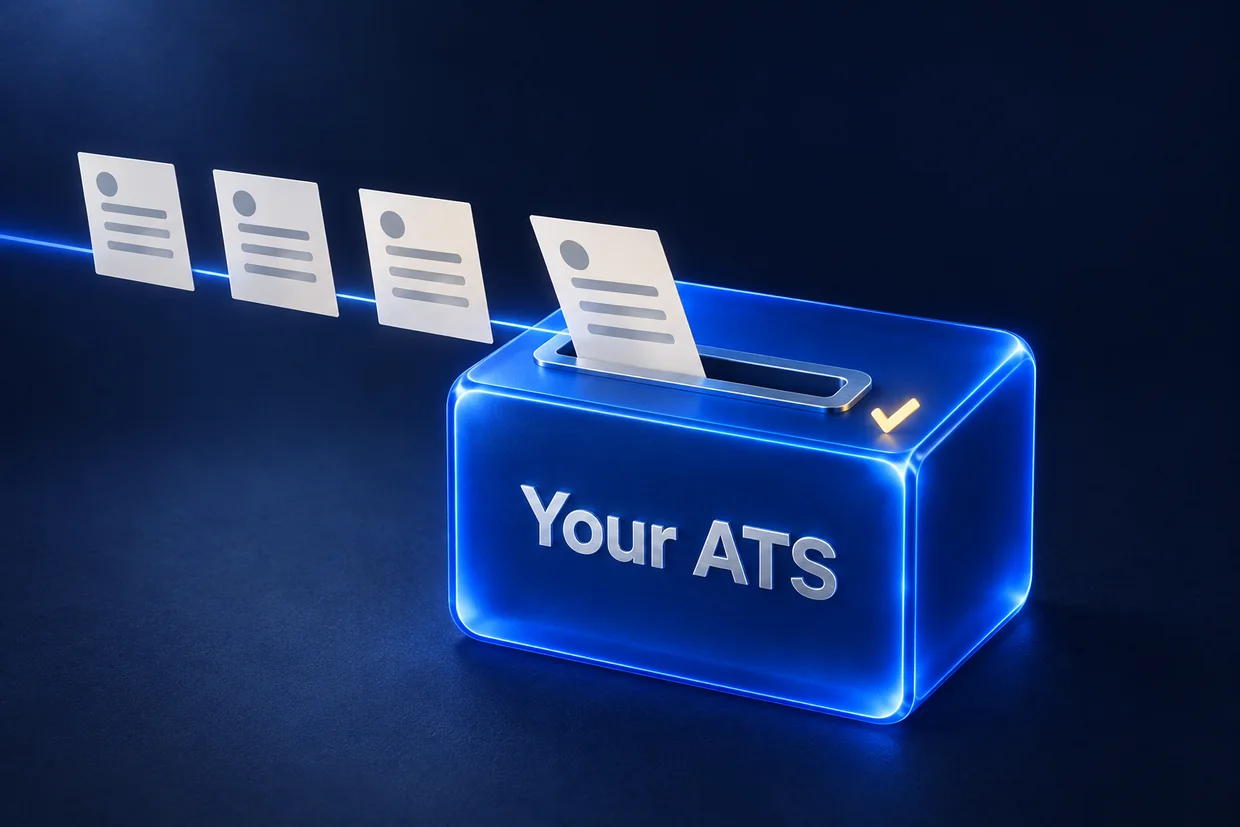
It runs inside the ATS you already use.
Your team already works in the ATS: candidates arrive there, notes go there, and shortlists go to clients from there. A separate tool means another login and copying every CV across by hand, on top of the pile you already have. So we connect to the ATS instead, starting with Workable. Each candidate's screening will show up on their record, and nobody changes where they work.
Using a different ATS? Mention it in the form below. The ones people ask for most get connected next.
We raced it on 1,000 CVs.
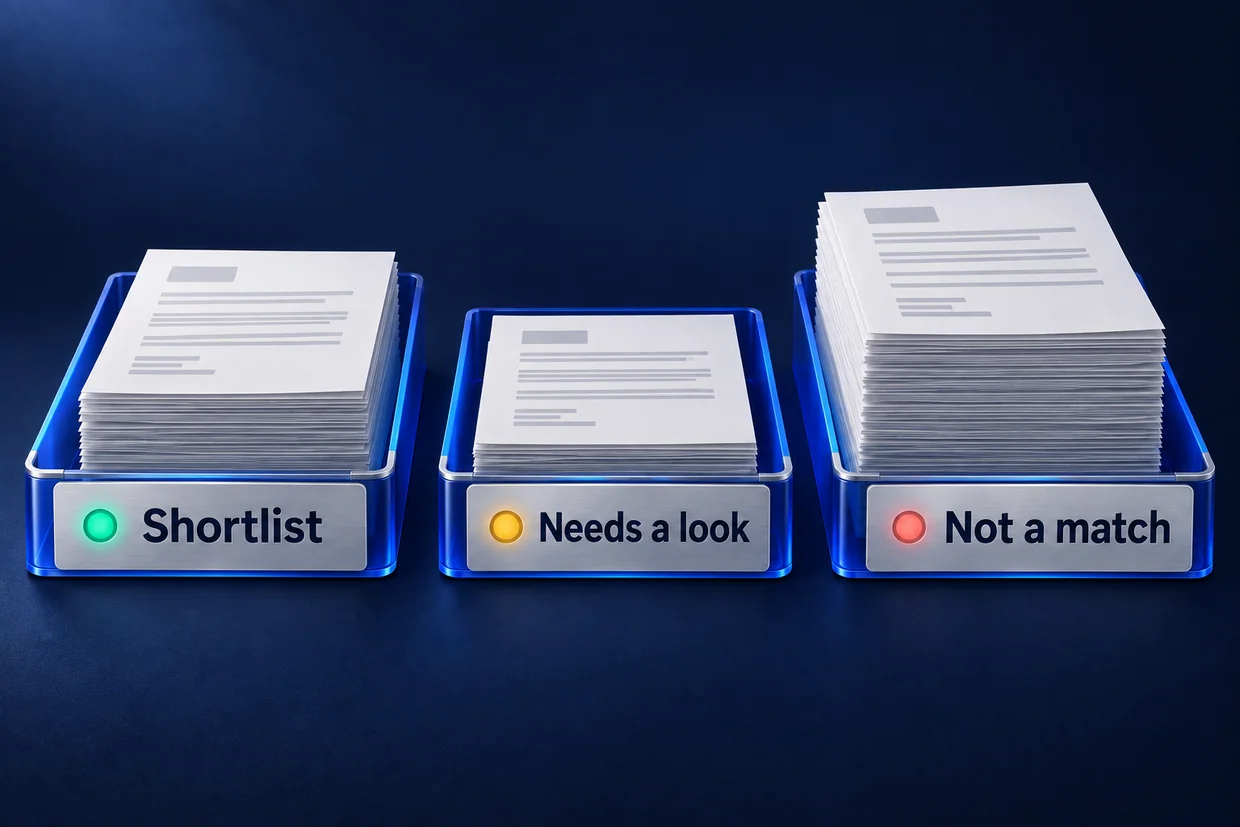
We built 1,000 applications for a Senior Accountant role in Dubai and wrote down the right call for each one before testing. Then we gave the same files to three screeners and counted how often each one got it right.
How often each one got it right
- 100%of the candidates who should have made it through did. None of them were rejected.
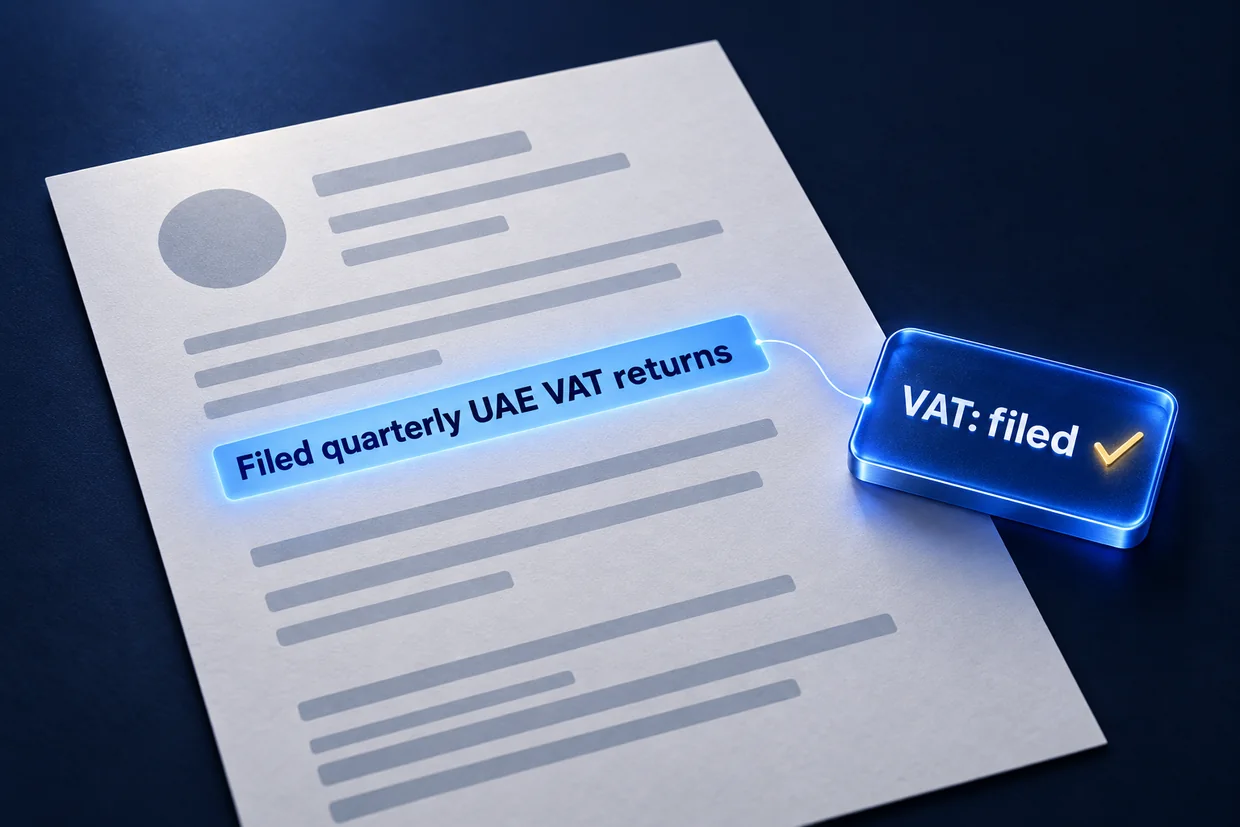
- 50 of 50look-alike pairs split correctly. Each pair is two CVs with the same words where only one person did the work, for example filed the VAT return or helped with it. A keyword filter can't tell them apart.
- 229wrong people on the AI screener’s shortlist. Each one is a CV you’d open, read and reject yourself.
This is one role, tested on CVs we built to look like a Dubai pile: AI-polished CVs, near-identical pairs, missing visa and notice details. The next test is a live role. If you have one you would like us to screen, say so in the form below.
Why this works now
Most AI screeners ask a model one big question: is this person a good Senior Accountant? It feels like the natural thing to ask, because it’s what you’d ask a colleague. But the model has to weigh the whole CV at once, and a well-written claim reads the same to it as a real track record. In our test that approach got it right 43.6% of the time.
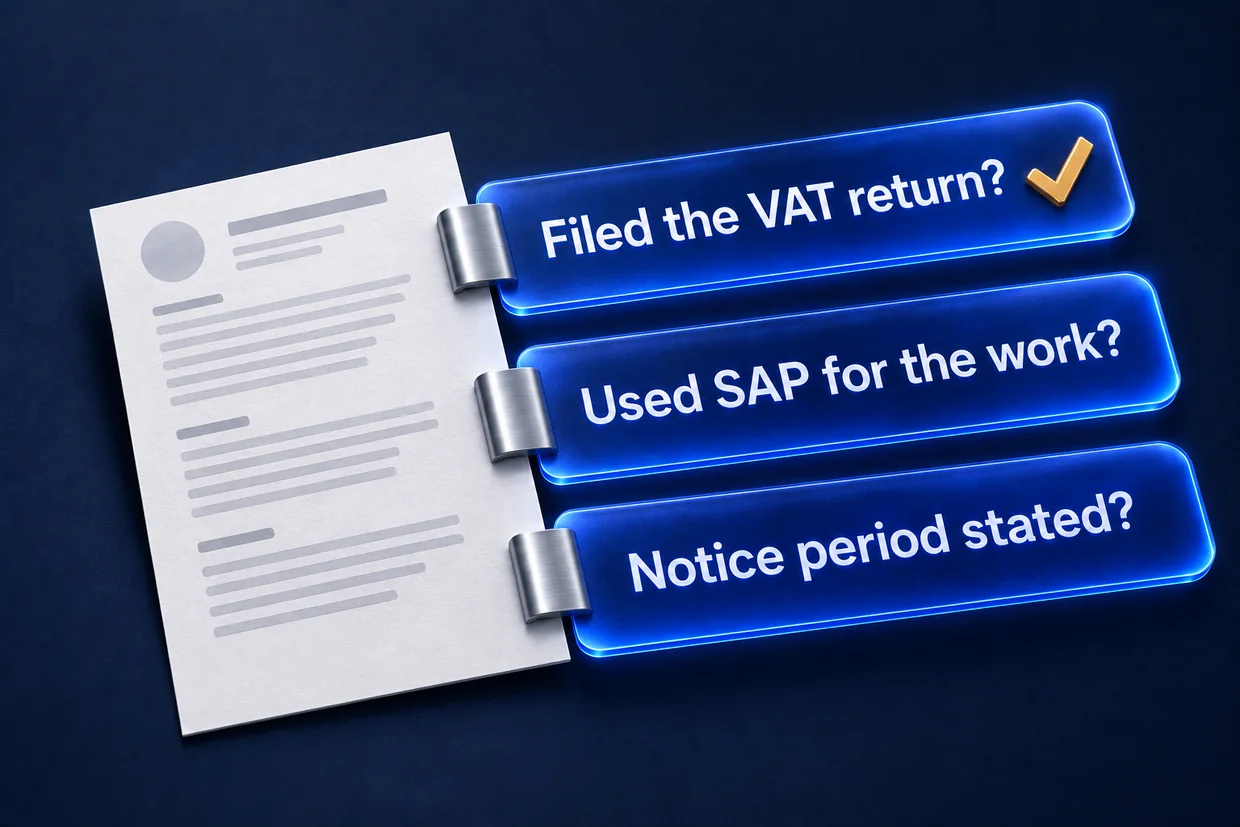
A small question like “did they file the VAT return themselves?” has a clear answer in the text. Jev, a new model from TypeSafe, can ask about twenty of those about one CV at the same time, and fixed rules turn the answers into the decision.
- Did they file the VAT return, or only support it?
- Did they run the month-end close, or help with it?
- Did they use SAP for the work, or only list it?
- Is their visa or notice period stated?
- ~20small questions per CV, asked at the same time
- ~30 sto get through 1,000 CVs
Tell us what hurts
One question, and we read every answer ourselves. The things people describe most often are what we build first.